






This post is also available in:
 Deutsch
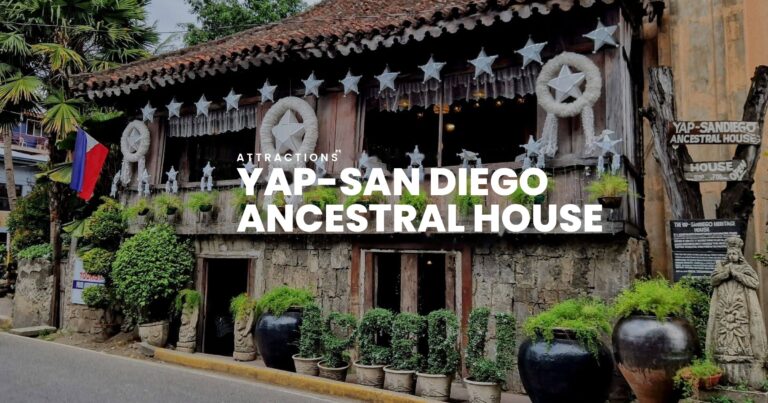
Cebu is known not only for beaches and nature; it is also home to historical treasures that reflect the region’s rich past. Among these treasures, the Yap-San Diego Ancestral House stands out as a jewel of colonial architecture and of Cebu’s cultural heritage. This well-preserved estate, which sits in the heart of Parian, the city’s oldest district, tells the fascinating story of a family that has preserved the legacy of its ancestors over generations.
The Yap-San Diego Ancestral House is one of the top attractions in Cebu City and should not be missed on a visit to the city, because it conveys the historical heritage and the significance of the colonial period in the Philippines very well.
Step into a completely different time and visit the Yap-San Diego House in Cebu City. With our guide you’ll get all the information you need, as well as some background on the heritage of what is probably the oldest still-standing house in Cebu.
In this guide
Location & opening hours: Yap-San Diego House
The Yap-San Diego House sits near the port area of Cebu City and was, in colonial times, the center of the colonial settlement. Today the Yap-San Diego House is found in Cebu’s old town, which has little in common with the modern gloss of Cebu’s newer districts.
- Opening hours: Monday–Sunday 9:00 a.m.–7:00 p.m.
- Address: 155 Mabini St, Cebu City, 6000 Cebu, Philippines
Information on the Yap-San Diego Ancestral House Cebu
The Yap-San Diego Ancestral House in Cebu is undoubtedly a jewel from the colonial era and is among the oldest surviving houses in the Philippines. The estate, which sits in the heart of the historic Parian district, has its origins in the hands of an important Chinese trading family that has preserved its cultural identity over generations.
The house itself is an impressive example of colonial architecture, whose charm is enhanced by the authentic preservation of furniture and other historical artifacts. At an admission price of 100 PHP per person, the Yap-San Diego Ancestral House not only grants access to a piece of Philippine history, but also a fascinating introduction to the way of life and culture of that time.
Visitors are encouraged to explore the house, take photographs, and even touch the historical objects. This interactive approach allows guests to form a direct connection with the past era. A short introduction to the history of the house is the start of a self-guided tour that offers fascinating insights into colonial-era life.
The small garden of the estate offers not only a pleasant atmosphere, but also cultural entertainment in the form of traditional music and dance performances. A picturesque well completes the idyllic picture and adds to the authentic atmosphere of the place. In earlier times, by the way, the house’s well was used as a freshwater source; today it only serves to water the plants.
What makes the Yap-San Diego Ancestral House especially unique is the fact that the current owners are said to still sleep in the house. This gives the place an added dimension, because it is not only a museum, but also a living testament to the continuity of the family history. A visit to this historic estate thus promises not only a journey into the colonial period, but also a unique look at the present-day life of the Yap-San Diego family. It is undoubtedly a worthwhile experience for anyone interested in the rich history and culture of the Philippines.


The history of the Yap-San Diego House
The Yap-San Diego Ancestral House, one of the oldest houses in the Philippines, is also said to be the first Chinese house outside China. It was built during the Spanish colonial period and represents a 17th-century structure that combines both Spanish and Chinese influences.
Built between 1675 and 1700, the house originally belonged to a wealthy Chinese merchant, Don Juan Yap, and his Filipino wife Doña Maria Florido, together with their three children Maria, Consolacion, and Eleuterio. In the 1880s, Maria, their eldest daughter, married Don Mariano Sandiego. The name of the house derives from this marriage.
The family became prominent members of society, especially in the arts and culture, and played a major role in the gradual development of the Sinulog Festival in Cebu.
In 2008, the house passed to the great-grandson of Doña Maria, Val Mancao Sandiego, and his wife Ofelia. Val Sandiego, choreographer of the Sandiego dance company and an art collector, turned the house into a museum that presents the history of his ancestors.
Admission at the Yap-San Diego House Cebu
Admission to the Yap-San Diego House is 100 PHP per person.
How to get to the Yap-San Diego House Cebu
For tourists and foreigners, the Yap-San Diego House is best reached by taxi or Grab.
The best time to visit the Yap-San Diego House in Cebu
The Yap-San Diego House can be visited throughout the day. Visitor numbers are generally limited, and only a certain number of visitors are allowed into the house at a time.
Still have questions or comments about the Yap-San Diego House? Leave a comment and we’ll be sure to reply!