






This post is also available in:
 Deutsch
Cebu, one of the most beautiful islands in the Philippines, has lived through a fascinating history over the centuries and grown into a sought-after travel destination. With its rich culture, stunning natural beauty, and friendly people, Cebu draws thousands of visitors from around the world every year. Here you will find everything about the history of Cebu and the influences that still shape the island today.
In this article
Cebu’s early history and colonization
The history of Cebu goes back a long way and is closely tied to the colonization of the Philippines. In 1521, the Portuguese explorer Ferdinand Magellan landed on the island and documented the first encounter between Europeans and the local population in the Philippines. This event marks the beginning of the Spanish colonization of the islands. Magellan formed an alliance with the local ruler Rajah Humabon, who converted himself and his people to Christianity. That opened the way for Christianity to spread across the Philippines, an influence that still shapes the culture and everyday life of people in Cebu and throughout the country.
Over the following centuries, Cebu was ruled by several colonial powers, including the Spanish, the Americans, and the Japanese during World War II. The Philippines finally gained independence from the United States in 1946, and Cebu became part of the independent nation of the Philippines.
The colonial period in Cebu and the struggles of the local people
During the colonial period, Cebu was a flashpoint in the struggles among the colonial powers competing for control of the Philippines. After Ferdinand Magellan landed on Cebu in 1521, the Spanish continued their efforts to conquer the island and the surrounding areas.
Spanish rule in Cebu was not uncontested, however. Local tribes and leaders, such as Lapu-Lapu, resisted the Spanish conquistadors and fought for the independence of their island. The best-known example of this resistance is the Battle of Mactan in 1521, in which Lapu-Lapu and his warriors defeated the Spanish forces led by Magellan.
That victory remains a significant moment of Philippine national pride and is still celebrated today as a symbol of resistance to foreign rule.
The influence of the colonial era
The Spanish colonial period had a profound impact on Cebu and the Philippines as a whole. The Spanish brought not only Christianity, but also their culture, architecture and agricultural techniques. This led to the building of churches and forts that can still be seen in Cebu today, such as Magellan’s Cross and Fort San Pedro. The Spanish also influenced Filipino cuisine by introducing ingredients such as tomatoes and garlic. Sugar cane was brought to the Philippines by the Spanish colonial power as well, which later gave rise to Filipino rum, still the country’s national spirit today.
The colonial period also brought exploitation and oppression. Local people were forced into labor on plantations and in mines, and land was expropriated. That led to social unrest and uprisings against Spanish rule. A well-known uprising was the Cebu revolt of 1898, in which the local population fought the Spanish colonial power and eventually gained independence.
The colonial period in Cebu was marked by cultural exchange, armed conflict, and social change. The traces of that era are still visible on the island today and recall the complex history of Cebu and the Philippines. Despite the challenges and conflicts of the colonial years, the island has grown into a lively and diverse cultural landscape that draws visitors from around the world.

Cultural diversity and traditions
The cultural diversity in Cebu is a reflection of that complex history. The island is home to many different ethnic groups, each with its own traditions, customs, and languages. Cebuano is the language most widely spoken on the island, but there are also many dialects and languages used by the various communities.
That cultural diversity is on display in the many festivals and events held throughout the year. The Sinulog Festival is one of the best-known festivals in the Philippines and is celebrated in Cebu in honor of the Santo Niño, a Christian icon. During the festival, people in colorful costumes fill the streets and dance to traditional music. The Sinulog Festival is now a popular tourist attraction and a one-of-a-kind experience.

Cebu City and its industrial role in the Philippines
The city of Cebu, the capital of the province and island of Cebu, has grown and developed remarkably over time. As one of the most important trading centers and economic hubs in the Philippines, Cebu has had a decisive influence on the country’s industry. In recent decades, the city has also become a major center for the information and communications technology sector.
Many companies have set up in Cebu, driving strong economic growth and an increase in jobs. The Port of Cebu and Mactan-Cebu International Airport also play a crucial role in trade and tourism in the Philippines. Cebu’s infrastructure and growth have made the city an important engine of the Philippine economy and further strengthened its importance in the region.
Cebu City is often regarded as a first-world city, and the downtown area in particular is highly developed. In Cebu, there is almost nothing you cannot find.

Cebu’s rise as a tourist destination
In recent decades, Cebu has become a popular travel destination. The island offers an impressive range of activities and sights for visitors. The main attractions on Cebu include:
White-sand beaches: Cebu is known for its stunning beaches. Places such as Mactan Island and the Moalboal peninsula offer crystal-clear water and white sand, perfect for swimming, snorkeling, and relaxing.
Diving and snorkeling: The Cebu region is home to some of the best dive and snorkel sites in the world. The islands around Cebu offer a rich underwater world, with colorful coral reefs and a wide variety of marine life.
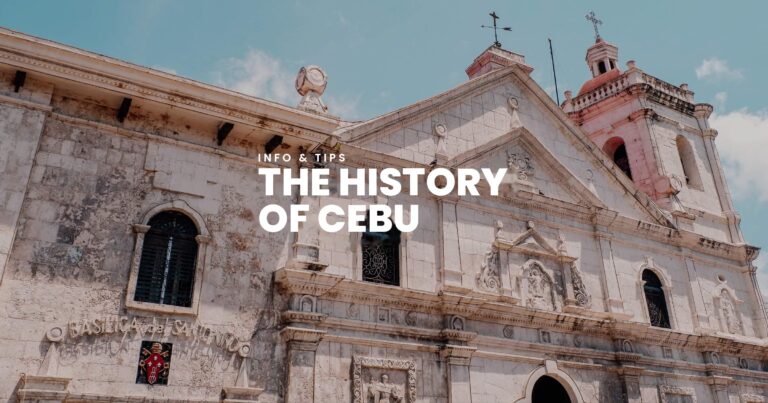
Cultural sites: Cebu has historic sites including Magellan’s Cross, the Basilica Minore del Santo Niño, and Fort San Pedro, all of them witnesses to the island’s colonial past.
Adventure and outdoor activities: For adventure seekers, Cebu offers plenty of options for hiking, climbing, ziplining, and canyoning. The island also has beautiful rivers and waterfalls that are ideal for nature experiences.
Tourist infrastructure in Cebu has improved considerably in recent years, with a wide range of places to stay, restaurants and activities that meet visitors’ needs. Mactan-Cebu International Airport makes arriving easier, with connections to many cities in Asia, the Middle East, and the United States. Cebu Airport itself has also been extensively modernized, underscoring Cebu’s importance as a tourism and industrial hub.
The hospitality of the local people also adds to Cebu’s appeal as a travel destination. People are warm-hearted and happy to share their culture and traditions with visitors.

Living conditions and safety
In many respects, living conditions for people in Cebu are better than in other parts of the Philippines. Cebu City and the surrounding areas have benefited from economic development and growth, which has led to a higher quality of life. Jobs in the growing IT industry and the tourism sector have contributed to a lower unemployment rate and higher incomes. That has given people in Cebu greater financial stability and better access to education, healthcare, and other basic services.
Compared with rural areas of the Philippines, where poverty is widespread, living conditions in Cebu tend to be more comfortable. The island of Cebu is among the most prosperous regions of the Philippines as a whole.
That said, social and economic inequalities remain, especially in urban slums and disadvantaged communities. The government and various nonprofit organizations are working to reduce these inequalities and further improve living conditions in Cebu. Despite differences in living standards in different parts of the island, Cebu as a whole is a region of the Philippines where living conditions are more favorable than in many other parts of the country.
The safety situation in Cebu
Safety in Cebu is at a good level, especially in tourist areas and urban centers such as Cebu City. The Philippine government and local authorities have made efforts to keep visitors and residents safe. Still, travelers should take the usual precautions, as they would in any other region of the world. That includes looking after valuables, avoiding walking alone at night in remote areas, and following local advice.
Although Cebu is generally considered safe, petty theft and minor crime can occur from time to time, as they can anywhere in the world. People are usually friendly and helpful, though, and most visitors can enjoy their stay in Cebu without running into major safety problems.

Cebu is not only a place of historical importance, but also a paradise of unmatched natural beauty and cultural variety. The island has become a sought-after destination that draws both history enthusiasts and nature lovers. With its rich history and stunning sights, Cebu will surely continue to captivate visitors from around the world.
You can find more general tips & guides about Cebu here…
Do you have any questions or additions about Cebu’s rich history? Feel free to leave a comment further down this page!