






This post is also available in:
 Deutsch
Cebu City, the heart of the Visayas and the second-largest city in the Philippines, offers a wide range of ways to get from A to B. Thanks to tricycles being removed from the city proper, traffic has improved noticeably, especially in the busiest areas. Compared with other large Asian cities, traffic in Cebu is relatively moderate, though delays can still happen at rush hour. Here’s an overview of the main ways to get around Cebu City and how to use them best.
Contents
1. White Taxis
White taxis are the most common type of taxi in Cebu City and a convenient option for locals and tourists. They run on a meter, with a base fare of about 40 PHP and around 2.50 PHP added for every additional 300 meters. Taxis are a good option if you don’t want to use public transport and have a direct destination. It’s advisable to make sure the driver turns on the meter to avoid inflated prices. In general, though, this is rarely a problem in Cebu.
Taxis are available almost everywhere and can be hailed at the roadside. They’re a safe and comfortable way to get around the city. During rush hour, though, it can take longer to find a free taxi.

2. Grab: The Best Choice for Tourists
For tourists, Grab is often the best choice when it comes to getting around safely, comfortably and reliably. Grab is the Southeast Asian version of Uber and works via a mobile app that lets you call a vehicle easily. The price is set before the ride, but it is identical to the meter fare. Grab users only pay a small surcharge for booking through the app. Grab also lets you pay for the ride cashlessly.
Overall, Grab is highly recommended for tourists because of how simple and safe it is. Fares for a Grab car are slightly higher than a regular taxi because of the ride-hailing fee, but they’re still affordable.
Info: Even longer trips within the city usually cost around 150–350 PHP with Grab or white taxis, which is about 2–6 euros.

3. Motorbike Taxis (Habal-Habal)
Another way to get around Cebu City is motorbike taxis, also called “habal-habal.” These motorcycle taxis are especially practical for shorter trips or places that are hard to reach by car. They’re faster and more nimble in city traffic, particularly when there are jams.
The price of a ride depends on the distance, but is generally cheaper than taxis. You should always agree on a price beforehand if you’re not using a Grab motorcycle. The local app “Angkas” offers motorbike taxis that are a bit more expensive, but insured and safer. Fares are often under 100 PHP per trip.
Info: You can also use all the ride-hailing services in Cebu to order food, which is delivered straight to your hotel or condo by motorbike. Ideal if you don’t want to head out into the big-city bustle yourself.

4. Jeepneys: The Heart of Public Transport
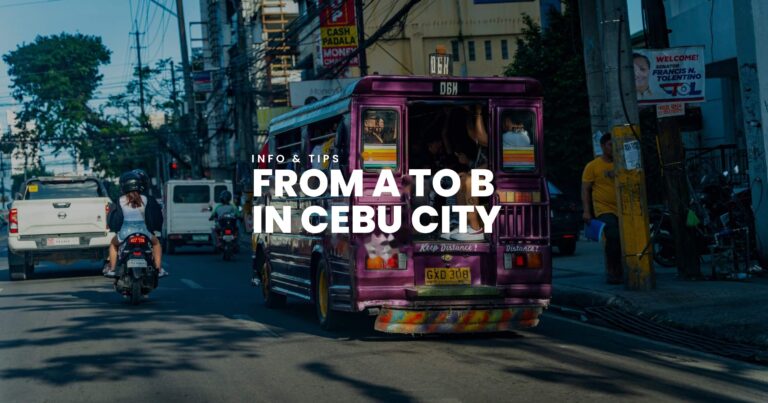
Jeepneys are the most traditional form of transport in Cebu and across the country. These colorful, open vehicles run fixed routes and are extremely cheap, with fares from about 12 PHP per ride. They do take a little experience, though, because they don’t have fixed stops and you have to tell the driver where you want to get off.
Jeepneys are ideal for short distances and if you want to save money. For tourists, though, they can be a bit confusing, because the routes aren’t always clearly marked. If in doubt, ask locals or the driver for the best route. Cebu City now also has modern, air-conditioned e-jeepneys, a more comfortable alternative to the traditional jeepneys, which have now all but disappeared from the cityscape.

5. No More Tricycles in the City Proper
A major step toward improving traffic in Cebu City was the ban on tricycles (three-wheeled motorcycle taxis) in the city proper. These vehicles used to be a common choice for short trips in the city, but their low speed and unpredictable driving often held up traffic. With the ban, traffic has become noticeably smoother and congestion has eased.

6. Yellow Taxis: Airport Transfers Only
A special type of taxi is the yellow taxi, which operates exclusively at Cebu airport. These taxis may only do airport transfers and are usually a bit more expensive than white taxis. They’re convenient, though, and a good option if you want to go straight from the airport into the city or to your hotel. They’re not available for trips within the city.

7. Your Own Scooter: Maximum Flexibility
Another way to get around Cebu City is to rent a scooter. This gives you maximum flexibility, especially if you also plan to explore the surrounding areas. You should familiarize yourself with the local traffic rules and the way people drive downtown, though. A separate guide to renting a scooter in Cebu City covers everything you need to know about the requirements and costs of a rental.

Traffic and Rush Hour in Cebu City
As in any big city, Cebu City has rush hours, especially in the morning from 8:00 to 9:00 a.m. and in the evening from 5:00 to 7:00 p.m. During these times the main roads, such as the Mandaue City route and downtown, can get congested. Compared with other large Asian cities such as Manila or Bangkok, though, traffic in Cebu is usually moderate and flows more smoothly. If you avoid peak hours or use motorbike taxis or a scooter, you can largely dodge the traffic.
Getting Around Cebu City — Verdict
Cebu City offers many ways to get around. For tourists, Grab is often the best choice, while locals rely on jeepneys. Removing the tricycles has improved the flow of traffic, and renting a scooter gives you extra freedom for independent trips. Once you’ve got the hang of Cebu’s traffic, you can explore the city efficiently and without much trouble.
Still have questions about transport in Cebu City and how to get from A to B? Leave a comment!