






This post is also available in:
 Deutsch
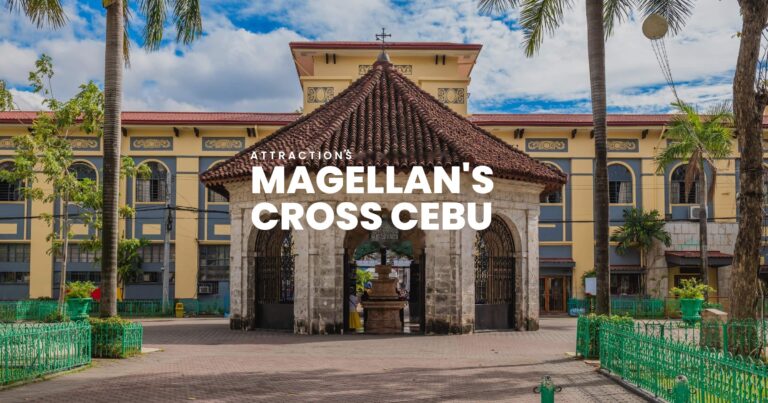
In the heart of lively Cebu City in the Philippines, set on a historic plaza, stands the fascinating Magellan’s Cross – a symbol of cultural encounter and historical significance. This religious relic, which commemorates the arrival of the Portuguese explorer Ferdinand Magellan in 1521, is not only a religious landmark, but also an important part of Philippine history. Magellan’s Cross draws numerous visitors every day, attracted by the depth of its history and its spiritual atmosphere.
Let’s dive together into the history and the symbolic meaning of this unique cross, which makes Cebu an essential destination for anyone interested in culture and history. You’ll find all the information about Magellan’s Cross in Cebu City in this guide!
In this guide
Location & opening hours: Magellan’s Cross Cebu City
Magellan’s Cross is located in one of the oldest districts of Cebu and is within easy walking distance of Fort San Pedro and the Basilica of Santo Niño. The Magellan’s Cross pavilion can be visited throughout the day; in the evening the square is atmospherically lit.
- Opening hours: Monday–Sunday, 8:00 a.m.–6:00 p.m. – the plaza itself is accessible 24/7
- Address: 7WV2+CQG, P. Burgos St, Cebu City, 6000 Cebu, Philippines
About Magellan’s Cross Cebu City
Magellan’s Cross in Cebu is not only a fascinating relic, but also an important focal point in a charming pavilion on a picturesque square. Set in lively surroundings, visitors can admire this historic cross, which commemorates the arrival of Ferdinand Magellan in 1521. This meeting point of Western and Philippine culture offers not only a fascinating insight into history, but also the chance to light candles as a symbolic offering. The atmospheric site also provides direct access to the famous Basilica of the Santo Niño, another important religious site and attraction in Cebu. Magellan’s Cross thus represents not only historical significance, but also a living spiritual tradition in the midst of Cebu City’s vibrant atmosphere.


Background on Magellan’s Cross in Cebu
Magellan’s Cross in Cebu is a historic relic closely tied to the events of the Spanish colonial period. The Portuguese explorer Ferdinand Magellan reached the Philippines in 1521 on behalf of the Spanish crown and, on that occasion, introduced Christianity to the region. The cross, which was supposedly planted by Magellan himself at this exact spot, symbolizes that historic moment and marks the beginning of the Christian faith in the Philippines. It is important to emphasize, however, that the current cross in the pavilion is a replica. The original structure has been restored and modified several times, and it is believed that only a small part of the original cross has been preserved. Visually, too, the current cross is likely to differ considerably from the version of that time.
Even so, Magellan’s Cross remains an important testimony to the historic encounter between Western and Philippine culture, as well as a place of cultural and spiritual interest in Cebu.

Admission to Magellan’s Cross Cebu
There is no admission fee for Magellan’s Cross. The pavilion with the cross can be visited free of charge.
Getting to Magellan’s Cross Cebu
Magellan’s Cross Cebu is located in the Santo Niño district, which is best reached by taxi. A ride within the city takes 10–20 minutes depending on your starting point and costs around 150 PHP. If you’re on a sightseeing tour, you can first go to Fort San Pedro and then walk from there to Magellan’s Cross and other attractions in just a few minutes on foot.
The best time to visit Magellan’s Cross in Cebu City
In general there is no particular time of day that is especially worthwhile. Magellan’s Cross is busy throughout the day, but it is by no means the case that you have to put up with long waits or large crowds.
Still have questions or comments about Magellan’s Cross Cebu? Leave a comment!