






This post is also available in:
 Deutsch
Sinulog is much more than a festival – it is a huge emotional, cultural and spiritual event that puts Cebu into a state of emergency every year. Millions of people pour into the city to experience the mix of religious devotion, wild celebrations and spectacular street parades. If you visit Sinulog for the first time, you will quickly notice that this weekend changes the entire city: streets are closed, crowds fill every open space, and the atmosphere is a unique combination of devotion, chaos and joy of life. To make your visit a success, it is worth taking a closer look at the history, the schedule and the special challenges this festival brings.
In This Sinulog Guide
Background, History and Meaning of Sinulog Cebu
The roots of the Sinulog festival go back far into pre-colonial times. The word “Sinulog” describes the wave-like movement of water – a rhythm that found its expression in the ancient ritual dances of the locals. With the arrival of the Spanish in the 16th century and the introduction of the Santo Niño, a statue of the Child Jesus, these animist traditions merged with the Catholic faith.
The Santo Niño became a symbol of protection, hope and divine care, and people began to express their gratitude through dances and processions. Today, Sinulog is a festival that celebrates both religious devotion and cultural identity. The parade, the prayers and the exuberant celebrations express the deep bond the Cebuanos have with their history and their faith.
Background on the Santo Niño: Origin and Historical Significance
The story of the Santo Niño of Cebu begins in 1521, when Ferdinand Magellan presented the local Queen Juana with a small statue of the Child Jesus as a baptismal gift. This finely carved image, which probably came from Flanders, is considered the oldest Christian artifact in the Philippines and marks the beginning of the Christianization of the archipelago. After Magellan’s death and the temporary return of the Spanish to their homeland, the statue was forgotten until it was rediscovered in 1565, when the Spanish returned under Miguel López de Legazpi, in the ruins of a burned-down house – undamaged and carefully wrapped in cloth.
The colonizers interpreted this event as a miracle, and it cemented the status of the Santo Niño as a holy symbol. Since then, the figure has stood for divine protection, family unity and the deep connection between faith and everyday life of Filipinos. Over the centuries, the veneration of the Santo Niño became a central part of Cebu’s identity and is still the spiritual heart of the Sinulog festival today. By the way, the statue is kept in the Basilica and can be admired all year round.

Saturday Night: The Big Party Around Mango Square
Before the actual parade begins, the Sinulog weekend kicks off with one of the biggest street parties in the country. On Saturday night, the area around Mango Square and Osmeña Boulevard turns into a pulsating hub of music, dancing and exuberant vibes. Young people, tourists and homecomers from all over the world gather here to party, drink and soak up the energy of the city. Bars and clubs are packed, improvised stages stand on every corner, and the streets become one single, vibrating festival ground. If you love nightlife, this is one of the most intense nights of the year in the southern Philippines.


Sunday: The Actual Parade
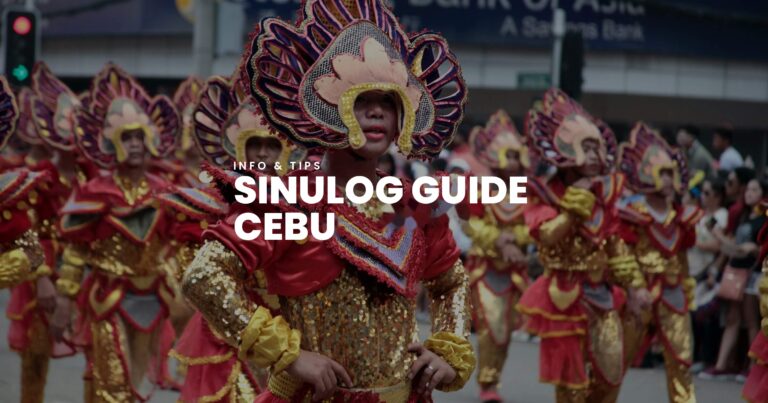
On Sunday, the city is all about the religious and cultural highlight. While the party from the night before slowly winds down, crowds stream into the streets to watch the parade. The parade usually starts in the morning and lasts for many hours. The mix of religious devotion, artistic performance and collective euphoria makes this day an emotional experience. Many visitors wear traditional clothing or T-shirts with the Santo Niño, and everywhere you hear the typical drum rhythms that form the heart of the festival.

The Route of the Big Sinulog Parade
The highlight of the Sinulog weekend is the big street parade on Sunday. The parade traditionally runs along Cebu’s central main roads, including Osmeña Boulevard, and turns the city into a giant stage. Dance groups from all regions of the Philippines present elaborate choreographies, accompanied by drums, loud cheers and colorful costumes. The floats are elaborately designed, often with religious motifs or depictions of local myths. If you want to see the parade, you should set off early, because the streets fill up hours before it starts. The atmosphere is dense, loud and electrifying – an experience that is hard to forget. In a way, the whole festival is a little reminiscent of the Carnival in Rio, although the festival in Cebu is of course nowhere near as extravagant.
Tips for Visitors: What You Really Need to Know
Visiting Cebu during Sinulog is fascinating, but also challenging. The city is extremely crowded this weekend, and many everyday things only work to a limited extent. Taxis are almost impossible to get (sometimes days in advance!), as numerous streets are closed and drivers avoid the traffic. The mobile internet often breaks down because the networks are overloaded. Visitors should be prepared to walk a lot, often over very long distances and through dense crowds.
Hotels charge sometimes astronomical prices during this time, and even simple accommodations are booked out months in advance. Restaurants, fast-food chains and even 7-Eleven stores regularly sell out because the demand is enormous. If you plan to go sightseeing or get to know Cebu at a relaxed pace, you will quickly realize that this is hardly possible during Sinulog. During these days, the city lives exclusively for the festival, and everything else takes a back seat. Also, plan a lot of extra time for really EVERYTHING! It is also highly advisable to book an airport transfer to the city and to Oslob or Moalboal in advance, as taxis and Grab at the airport are practically unavailable and sometimes booked out for hours! We recommend the provider GetTransfer*.
Safety Tips During Sinulog
During Sinulog, Cebu has an exceptionally dense and dynamic atmosphere that can be both fascinating and challenging for visitors. The crowds are enormous, and many streets are packed, which increases the risk of getting separated or caught in a crush.
It is advisable to carry valuables as close to your body as possible and only take the essentials, as pickpocketing is more common in dense crowds. You should also be aware that medical help or the police may not always be immediately reachable due to the overloaded infrastructure. If you feel uncomfortable in the crowd, head to quieter side streets early on, as it is hardly possible to move quickly through the masses.
Alcohol flows freely, especially on Saturday night, so it makes sense to stay alert and not go alone into extremely crowded areas. In addition, the heat combined with long walks and little shade can be exhausting, which is why drinking regularly and taking short breaks is important.
Overall: If you stay alert, keep an eye on your surroundings and don’t blindly push into the densest areas, you can enjoy the festival safely and relaxed, because at its core, Sinulog is also a family festival attended by many children. You can find a general guide to safety in Cebu here…
Conclusion Sinulog Cebu
Sinulog is a festival you should experience consciously – with preparation, patience and openness to what makes this weekend so special. The mix of tradition, spirituality and exuberant party culture makes Sinulog one of the most intense cultural events in Southeast Asia. If you embrace it, you will experience Cebu at its most passionate and lively. If you are visiting the city for the first time and want to explore the other sights, you should rather avoid Sinulog – the whole weekend feels like a state of emergency and “normal” activities are hardly possible.
Have you been to Sinulog in Cebu City? Leave a comment with your impressions!