






This post is also available in:
 Deutsch
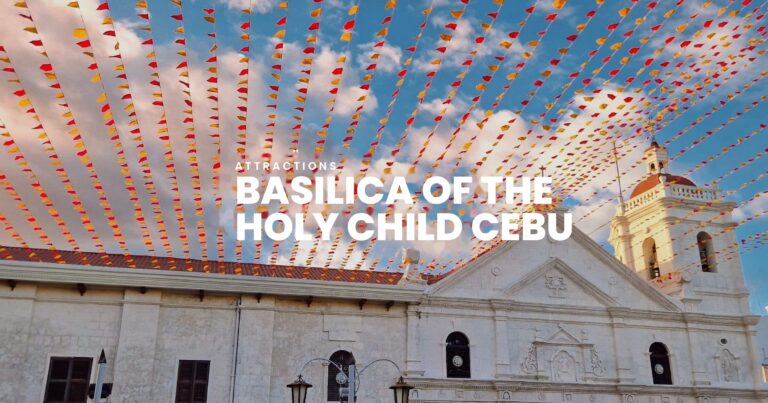
The Minor Basilica of the Holy Child, also known as the Basilica del Santo Niño, is an important Catholic church in Cebu City, Philippines. This impressive basilica is closely tied to the rich history of the Philippines and also plays a central role in the annual Sinulog Festival. In this post, we have put together everything you need to know about the Minor Basilica of the Holy Child of Cebu.
In This Post
Location & Opening Hours of the Minor Basilica of the Holy Child of Cebu
The Basilica of the Santo Niño is located in the old town of Cebu City, right next to several other major sights, so you can easily combine a visit to the basilica with other attractions. Fort San Pedro, Magellan’s Cross and the Cebu Metropolitan Cathedral are all just a few minutes’ walk away. The legendary Colon Street is also within easy walking distance.
The best way to get to the Minor Basilica of the Holy Child of Cebu is by taxi. A ride within the city should cost around 150 PHP. You can then reach the sights mentioned above on foot. In our view, though, an even better starting point for exploring the sights of Cebu City is Fort San Pedro, since starting there gives you the best route.
- Address: Pilgrim’s Center, Osmeña Blvd, Cebu City, 6000 Cebu, Philippines
- Opening hours: Monday to Sunday, 6:00 am to 7:00 pm
Entry to the grounds is free. Please keep in mind that the church is a place of worship and faith. Appropriate clothing and respectful behavior should go without saying.
What Can You Experience at the Santo Niño Church?
The Minor Basilica of the Holy Child of Cebu is not only a religious center and an important pilgrimage site, but also a symbol of the cultural identity and faith of the Philippines. Its history, its architecture and its role in the Sinulog Festival make it a fascinating place for believers and culturally curious visitors alike. That is why the basilica in the heart of Cebu City’s old town is one of the most important sights in the city, and one you definitely shouldn’t miss.
The History of the Santo Niño Statue
The history of the basilica goes back to the time of the Spanish colonization of the Philippines. In 1565, the Portuguese explorer Ferdinand Magellan gave an icon of the Holy Child (Santo Niño) to Queen Juana of Cebu, who was then baptized. This act marked the spread of the Catholic faith in the region. However, the original chapel that housed the icon was destroyed in a fire in 1566. The present basilica was built on the same site in the 18th century.
The Basilica del Santo Niño is not only an architectural gem, but also a sacred place for believers. The main altar holds the statue of the Holy Child, which is considered the oldest religious artifact in the Philippines. Pilgrims and tourists flock to the basilica all year round to attend Mass and say their prayers.


Sinulog, Santo Niño and the Role of the Basilica
A highlight for visitors is the annual Sinulog Festival, held in honor of the Santo Niño. The Sinulog Festival is one of the most colorful and vibrant cultural events in the Philippines, with street dancing, processions and religious activities. Believers gather in huge crowds to show their gratitude and devotion.
During the Sinulog Festival, the Basilica del Santo Niño becomes a central gathering point. The street dances, in which the dancers wear traditional Filipino costumes, often end in front of the basilica, where believers and participants offer their prayers and celebrate Holy Mass, which is held several times a day. The atmosphere is joyful, and the church is beautifully decorated with small flags. The outdoor area of the basilica also has grandstands to make room for as many pilgrims as possible. Especially around Sinulog, a visit to the Minor Basilica of the Holy Child of Cebu is a unique experience.
Do you have any questions about the Santo Niño Basilica? Leave a comment, we will definitely get back to you!